Empathy Isn’t a Personality Trait — It’s a Leadership Skill

Many leaders operate under an unspoken assumption: empathy is something people
either have or don’t.
That belief quietly shapes culture.
It influences who gets promoted.
It affects how feedback is delivered.
It determines how people experience challenge, growth, and failure.
And it limits what teams can become.
I understand this not only as an educator — but as someone who once depended on
others for nearly everything.
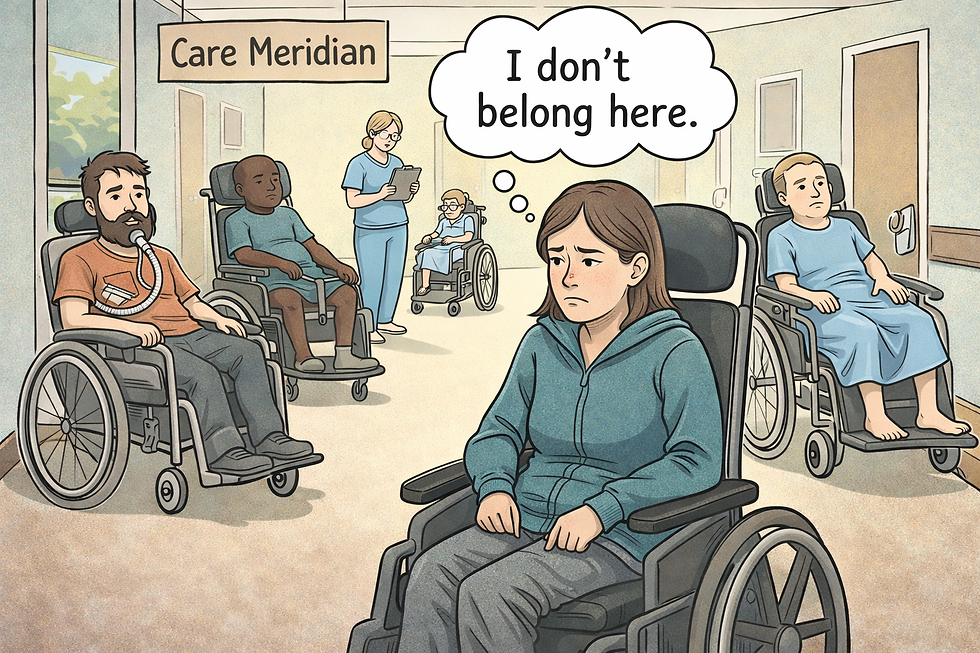
When I was transferred to a long-term rehabilitation facility, I remember thinking: I
don’t belong here.
Other patients were paraplegic, quadriplegic, or severely cognitively impaired. Few
people ate independently. Few spoke. They were called residents.
This was where they lived.
And now, this was where I lived.
I couldn’t eat.
I couldn’t talk.
I couldn’t move.
When I first arrived, I could stand unassisted for nine seconds — and that was considered
a victory.
My physical therapist, Dennis, had me crawl on a mat to retrain coordination between my
arms and legs. My occupational therapist, Mohammed, worked patiently (and persistently)
through the frozen shoulders that developed from prolonged immobility. He stretched my
arms behind me until I felt like a Thanksgiving wishbone and jokingly renamed the
therapy room “the torture chamber.”
Progress was slow. Painfully slow.

It was measured in:
Seconds standing
Steps taken
Stamina gained
Some days were worse than others.
But something critical happened alongside the technical work.
They brought my improvements to my attention when I couldn’t see them myself.
They said quietly, “Trust me. Trust yourself.”
They promised they would never let me fall.
They never did.
That wasn’t just kindness.
That was skilled empathy.
Their empathy did not make them “soft.”
It made them effective.
They pushed me because they believed in my capacity.
They measured progress.
They adjusted strategy.
They took calculated risks.
They created psychological safety while demanding growth.
That is leadership.
When empathy is treated as a personality trait, it becomes optional — something “nice
leaders” have.
When empathy is treated as a skill, it becomes trainable. Observable. Strengthenable.
Empathy allows leaders to:
Challenge without crushing
Measure growth without discouraging
Give feedback without diminishing
Stretch people without letting them fall
Empathy doesn’t replace competence.
It multiplies it.
Whether you lead a hospital unit, a classroom, a company, or a nonprofit, the same
principle applies:
People grow fastest when they feel both supported and stretched.
Empathy is the structure that makes that tension sustainable.
And like any skill, it can be practiced, refined, and strengthened.
Ready to Strengthen Empathy as a Leadership Skill?
If you’re a leader who wants to build a culture where people feel
supported and challenged — let’s talk.
I work with organizations and leadership teams to make empathy practical,
measurable, and actionable — not abstract or sentimental.
You can learn more about my training programs here:
Because empathy isn’t just about being kind.
It’s about helping people rise — without letting them fall.


Comments